
Physics and Astronomy Career Pathways
Sidebar
Career Prospects
Physics and Astronomy graduates are among the most employable scientists in any sector because their training is fundamentally about problem-solving under uncertainty — a skill that engineering, finance, technology, medicine, and research all demand. What path you take depends on which application of physics reasoning excites you most, and how far you want to take your education.
Research Science and National Laboratories
Physics and astronomy research — in national laboratories, universities, and private R&D — is the most direct application of the degree. The median wage for physicists is $166,290 (BLS, May 2024), reflecting the high technical value of advanced physics expertise. The largest employers of physicists include the federal government, national laboratories (Argonne, Oak Ridge, Fermilab, NASA, NIST), and private research firms. About 1,800 openings for physicists and astronomers are projected per year through 2034.
- Research Physicist or Astrophysicist*
- Atmospheric or Space Scientist
- Nuclear Physicist or Particle Physicist*
- Materials Scientist or Condensed Matter Researcher
- Observational Astronomer*
- NASA / DoE / DoD National Laboratory Researcher
- Industrial Research Scientist (semiconductors, energy, optics)
Senior research and academic faculty positions typically require a PhD in physics or a closely related field.
Engineering and Technology
Physics provides the mathematical and conceptual foundations that engineering disciplines build on, making physics graduates highly competitive in engineering-adjacent roles — particularly in aerospace, semiconductors, photonics, renewable energy, and advanced manufacturing. Many physics graduates enter engineering roles directly with a bachelor's degree, or with additional engineering coursework.
- Aerospace or Mechanical Systems Engineer
- Semiconductor or Materials Process Engineer
- Photonics or Optical Systems Engineer
- Renewable Energy Systems Engineer
- Nuclear Engineer (with engineering graduate coursework)*
- RF / Microwave Engineer (communications, defense)
- Test and Measurement Engineer
Data Science, Computing, and Quantitative Finance
Physics majors consistently rank among the most sought-after candidates in data science and quantitative finance, because their training in modeling complex systems under uncertainty maps directly to both fields. Data scientists are projected to grow 34% through 2034 — the fourth-fastest growing occupation in the economy. Quantitative analysts ("quants") at hedge funds and investment banks explicitly recruit physics PhDs and strong bachelor's graduates.
- Data Scientist or Machine Learning Engineer
- Quantitative Analyst or Financial Engineer
- Computational Scientist or Simulation Specialist
- Algorithm Developer
- Risk Analyst or Quantitative Risk Manager
- Software Engineer (physics/simulation applications)
Medical Physics and Healthcare
Medical physics is a specialized, credentialed field that applies physics to diagnostic imaging, radiation therapy, and nuclear medicine. The median wage for medical physicists (a subset under physical scientists) is above $100,000, and the field requires graduate credentialing. UofL's connection to the UofL Health system creates direct local pathways.
- Medical Physicist (radiation therapy, imaging)*
- Biomedical Engineer
- Clinical Laboratory Scientist
- Health Physicist (radiation safety)*
- Pre-Medicine / Physician (with pre-med coursework)*
Medical physics practice requires a master's or PhD in medical physics plus clinical residency. Pre-medicine paths require additional biology and chemistry coursework for MCAT and medical school admission.
Education and Academia
Physics teachers at the secondary level are in strong national demand, particularly in STEM-focused schools and underserved districts. Postsecondary physics faculty positions require doctoral credentials. The department's graduate program creates a direct pathway for students pursuing academic careers.
- Secondary School Physics or STEM Teacher*
- Community College Physics Instructor*
- University Professor of Physics or Astronomy*
- Science Curriculum Developer
- Science Museum Educator or Planetarium Director
K-12 teaching requires state licensure. University faculty typically require a PhD.
Government and National Security
Federal agencies employ physicists for research, defense, intelligence, and environmental applications. The Department of Defense, NSA, Department of Energy, EPA, and NOAA all recruit physics graduates for technical and analytical roles.
- Intelligence Analyst (technical)
- Defense Systems Analyst (DoD contractors)
- Nuclear Regulatory Commission Analyst
- Environmental Health Physicist
- Patent Examiner (physics, engineering)*
Patent examination and patent law roles (a well-established physics career pathway) typically involve USPTO civil service or a JD with technical background.
Career outcomes vary based on role, industry, experience, location and additional education. Career pathways listed reflect common directions pursued by graduates and are informed by national labor and education data, including the U.S. Bureau of Labor Statistics Occupational Outlook Handbook (bls.gov/ooh) and Employment Projections 2024–2034.
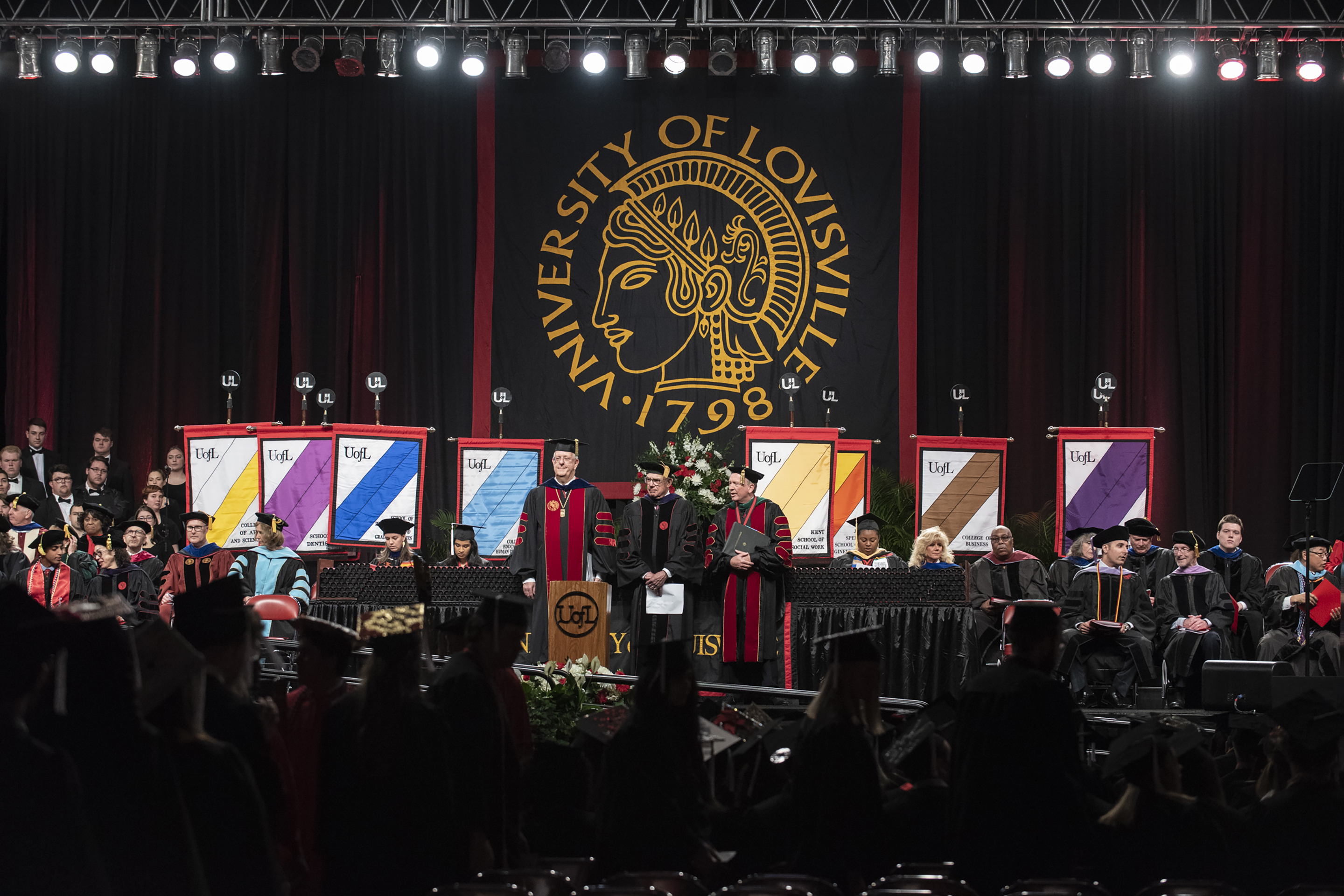
From Quantum Particles to Career Success
Ready to turn your passion for problem-solving and analytical thinking into professional impact? Explore Physics and Astronomy at the University of Louisville — where undergraduate research, NASA-funded faculty projects, and rigorous scientific training launch careers in research, engineering, data science, medicine, and beyond.