
Department of Physics and Astronomy
Where curiosity meets cosmic discovery. Explore everything from quantum particles to galaxy evolution while mastering skills that drive innovation across science, technology and beyond.
What is Physics and Astronomy?
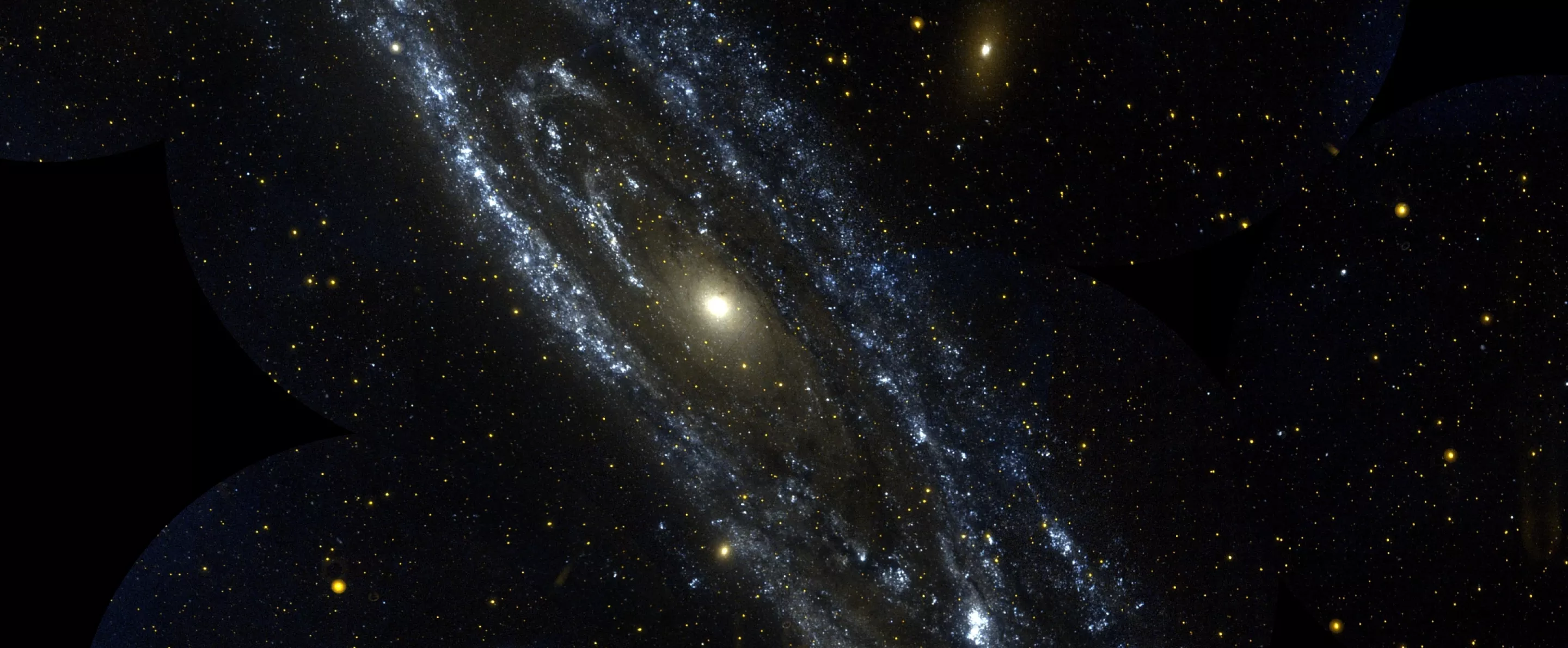
Discover the fundamental laws that govern everything from the tiniest particles to the vastness of the universe, while developing the advanced problem-solving skills that drive innovation across science, technology, medicine and engineering. Our department empowers you to explore the foundation of all sciences while engaging in cutting-edge research that pushes the boundaries of human knowledge — like Professor Benne Holwerda's NASA-funded galaxy evolution research where you'll contribute to real scientific discovery as an undergraduate.
Whether you're drawn to theoretical exploration, applied research or pre-medical preparation, our distinguished faculty guide you through transformative learning that builds analytical skills translating across industries, from developing physics-based medical technologies to creating innovations in quantum computing and renewable energy. From NASA Pathways internships to prestigious Goldwater and Fulbright fellowships, our students gain the expertise and connections that launch successful careers in academia, industry and government.
Here, your curiosity about how the universe works transforms into the analytical excellence and innovative thinking that solves complex challenges and creates technologies that improve human life.
Explore Your Future


Amplify Your Analytical Power

Why Study Physics and Astronomy?
Median annual wage for physicists
Projected growth for computer & mathematical occupations
Of employers say broad analytical and scientific education is important for career readiness
Recent News from Physics and Astronomy



Upcoming Events in Physics and Astronomy

Ready to explore the universe and your limitless potential?
Apply today to join our vibrant community. Explore our programs, meet faculty, and start your journey toward a successful career.
Career Prospects
Where Scientific Discovery Becomes Your Gateway to Limitless Opportunity
A Physics and Astronomy degree is training in how to think clearly about hard problems — and that skill translates everywhere. Physics graduates work as engineers, data scientists, financial analysts, software developers, medical physicists, research scientists, patent attorneys, educators, and national laboratory researchers. The discipline's emphasis on mathematical modeling, experimental design, and analytical reasoning makes physics one of the most versatile degrees in higher education.
The median annual wage for physicists is $166,290 — among the highest of any science discipline — and physics graduates who move into computer and mathematical occupations (the second-fastest growing occupational group in the economy at 10.1% through 2034) are in particularly high demand. UofL's department is distinguished by active undergraduate research opportunities, including Professor Benne Holwerda's NASA-funded galaxy evolution studies, giving students genuine research credentials before they graduate.
Whether you're heading to graduate school, medical school, engineering, data science, or national laboratory research, a physics degree gives you the analytical foundation that makes every subsequent training faster and more rigorous.
From Quantum Particles to Career Success
Ready to turn your passion for problem-solving and analytical thinking into professional impact? Explore Physics and Astronomy at the University of Louisville — where undergraduate research, NASA-funded faculty projects, and rigorous scientific training launch careers in research, engineering, data science, medicine, and beyond.