

Interdisciplinary Humanities
Disciplines include art history, literature, film, history, classical and modern languages, linguistics, music history, philosophy, theatre arts, Jewish studies, and religious studies through time.
Explore Comprehensive Programs
The Department of Interdisciplinary and Public Humanities offers one of the country's oldest and most flexible humanities degree programs, with roots going back to 1933. Students draw from a range of disciplines — including literature, film, history, philosophy, linguistics, music history, theatre arts, classical and modern languages, Jewish studies and religious studies — to build a program of study that reflects their own intellectual interests and goals. Whether you're drawn to a particular historical era, a cross-cultural question, or the intersection of two fields, our curriculum is designed to meet you there.

Connect with us

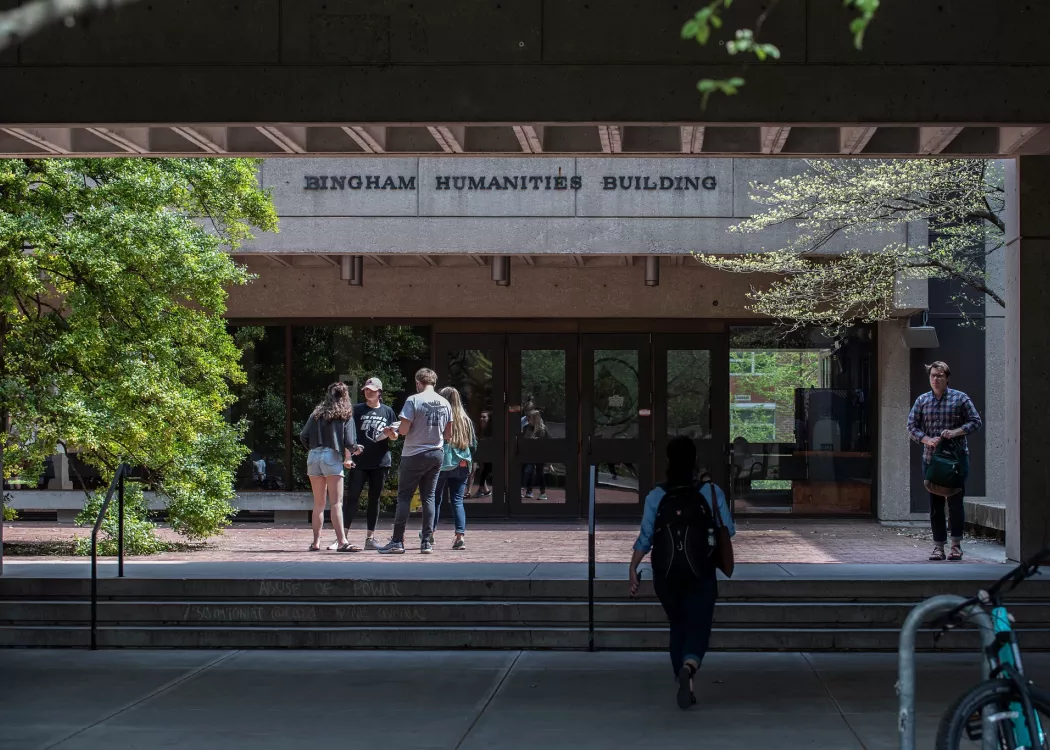

History & Mission
The Department of Interdisciplinary an Public Humanities has been asking big questions since 1933 — and building the skills to answer them. Established as one of the first integrated humanities programs in the country, the department was founded on the belief that the best education doesn't just transfer knowledge; it teaches students how to think, read and write their way through a complex world.
That mission hasn't changed. Today, the department draws on disciplines spanning art history, literature, film, history, philosophy, linguistics, classical and modern languages, music history, theatre arts, Jewish studies and religious studies — from ancient civilizations to the contemporary moment, and across cultures and traditions worldwide. Students work with faculty to build individualized programs of study that reflect their own intellectual interests, combining two disciplines or focusing on a particular historical period or cultural tradition.
The result is a degree that's as rigorous as it is flexible — one that prepares graduates to think across boundaries, communicate with precision and bring humanistic perspective to whatever field they enter next.
Who We Serve
The Department of Interdisciplinary and Public Humanities serves students who want more than a single-subject degree. Our programs are designed for undergraduate and graduate students drawn to the intersections of disciplines — those who want to study film alongside philosophy, pair language with history, or trace a cultural tradition across centuries and continents.
Whether you're building toward graduate study, a career in education, law, communications, public service, or the arts, a humanities degree from UofL gives you the analytical and communication tools to get there.
Frequently Asked Questions (FAQs)
The humanities encompass the stories, art, music, literature, theatre, film, and ideas that shape how we understand ourselves and the world around us. At their core, the humanities develop your capacity to think critically, communicate clearly, and engage meaningfully with complex questions — skills that are valuable in virtually every field and career.
More than you might expect. Humanities graduates work in fields ranging from law, education, and public policy to publishing, communications, business and the arts. The critical thinking, writing, and analytical skills developed through a humanities education are increasingly valued in today's knowledge-based economy.
Explore real career stories from humanities graduates through the National Humanities Alliance podcast What Are You Going to Do with That? — featuring working professionals who share how their humanities backgrounds shaped fulfilling careers. You can also review Humanities Majors in Kentucky data from the American Academy of Arts & Sciences.
Join the Leaders Who Think Differently
Ready to turn your passion for ideas, culture and community into professional impact? Explore Interdisciplinary and Public Humanities at the University of Louisville — where you design your own academic path across history, literature, philosophy and the arts, and build the critical thinking, research fluency and communication skills that law schools, graduate programs, nonprofits, cultural institutions and employers across every sector consistently rank among their most critical needs.