

Student Experience
Hands-on research, field work and a close community – discover what makes the Department of Biology at UofL exceptional.
Biology Student Life
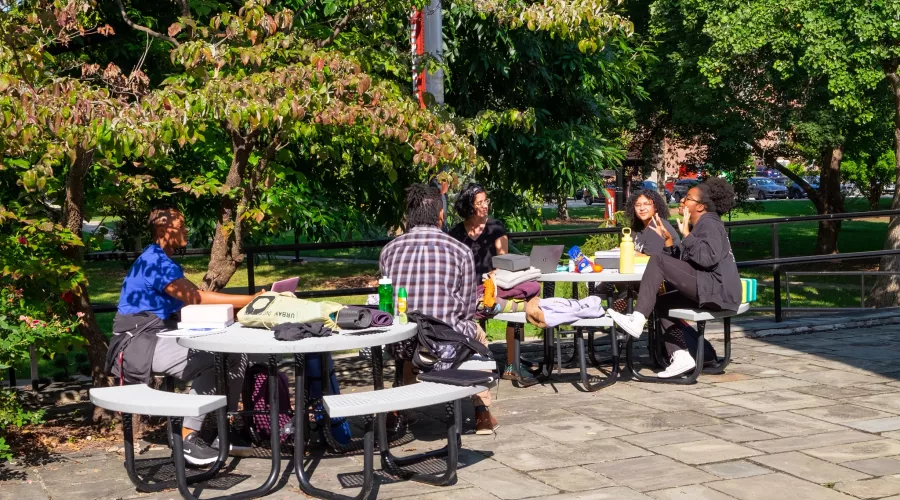
Biology at UofL is hands-on from day one. As a first-year student, you may be in a big introductory course, but the course is taught in the active-learning classrooms of the Belknap Academic Building, where you work in small groups solving real biological problems instead of just taking notes. In lab, the work continues to be hands on, and first-year students run a course-based research project – collecting soil and using genetic sequencing to identify the organisms living in it. A typical week for an upper-level major might mix lectures and seminars, a three-hour lab, time reading primary research for a seminar course, and hours in a faculty research lab. Outside class, there’s always something happening: a research sign-up fair, a student-organization open house, a lab “crawl” through research labs, trivia nights and holiday events. It adds up to a community that’s easy to plug into and hard to leave.


Beyond the Classroom
In the Department of Biology, learning extends far beyond the classroom. Students earn credit working in faculty labs on active research (BIOL 404–406), complete honors theses through the Department Honors Program, and learn ecological fieldwork firsthand at the Horner Wildlife Sanctuary. Paid summer programs like SROP, KEEP and KY INBRE offer 10-week research experiences, and students present their work at venues from the Undergraduate Arts and Research Showcase to Posters at the Capitol in Frankfort. Organizations such as Tri-Beta, the SEEDS Club and pre-health societies build community, while volunteer efforts like the Horner Butterfly Count and the Green Heart Louisville study connect students' science to the city around them. Together, these experiences prepare biology majors for graduate study, professional school and careers in the life sciences.
Academic Opportunities

Research
Join a faculty lab as early as your first year, through course credit (BIOL 404–406), independent study or paid summer programs.

Internships
BIOL 490 places you in hospitals, labs, agencies, zoos, conservation nonprofits or biotech firms; the Healthcare Skills Certificate adds structured clinical internships.

Study abroad
A tropical field biology course runs in alternating springs, culminating in a week in Belize.

GEMS – Guaranteed Entrance to Medical School
Students admitted to the GEMS program out of high school earn automatic admission to UofL’s School of Medicine, as long as they maintain a 3.4 GPA and meet the program’s ongoing requirements. It’s one of the clearest paths from a biology degree to a medical career.
Living-and-learning communities
First-year students can join BioBridges, which builds study habits and community from day one, or the Ecology-Sustainability themed community, with trips to places like Mammoth Cave and the Indiana Dunes.

Center for Integrative Environmental Health Sciences (CIEHS)
Named UofL’s Center of the Year in 2025, CIEHS connects biology, medicine, engineering and public health. Several biology faculty are affiliated, and students in the KEEP summer program train within it.

BIO-RETS K–12 teacher partnership
An NSF-funded program that brings Jefferson County Public School teachers into biology research labs each summer, a sign of how far the department’s science reaches into the community.
Research Opportunities
Research is the heart of biology at UofL, and undergraduates are part of it, often by their first or second year. Faculty study life across every scale, from molecules and cells to populations and whole ecosystems, and the work clusters around two big themes.
Disease evolution and pathogenesis
How do pathogens evolve, spread and cause disease? Faculty here trace that question from microbial genomes to wildlife populations. Paul Ewald helped pioneer evolutionary medicine; Deborah Yoder-Himes and Micah Worley study how bacteria evade our defenses; Michael Perlin uses CRISPR to probe fungal plant pathogens; and Abhinava Mishra studies how immune cells make decisions.
Ecology of human-modified ecosystems
What happens to life in cities and on farms? Mikus Abolins-Abols studies stress in urban songbirds; Andrew Mehring tracks greenhouse gases through urban ecosystems; Natalie Christian works on plant microbiomes for healthier crops; and Stephen Yanoviak studies arthropod life high in the forest canopy.
And much more
Faculty also study stem cells and development (Rafael Sênos Demarco), sleep and aging in fruit flies (Dae-Sung Hwangbo), the evolution of behavior in guppies (Lee Dugatkin), fish evolution and biomechanics (Matthew Kolmann), extremophiles that survive freezing and drying (Michael Menze), plant genetics and biofuels (Mark Running, David Schultz), and biology education itself (Linda Fuselier, Rachel Hopp). Every lab in the department welcomes undergraduate researchers.
Ready to start? Reach out to faculty whose work excites you, or talk with the undergraduate research directors.
Internship Opportunities
An internship turns the biology you’ve studied into experience you can show and drives purpose with a clearer sense of where you’re headed. The department’s main vehicle is BIOL 490, a 3-credit internship (junior standing, 2.5 GPA) flexible enough to place you in a hospital, environmental agency, research lab, zoo, conservation nonprofit or biotech firm; it also satisfies upper-level writing and the Culminating Undergraduate Experience. For students aiming at the health professions, the Healthcare Skills Certificate (BIOL 321, 322 and 323) builds clinical skills through two structured internships. Beyond the department, programs like the Center for Engaged Learning’s WINGS (paid support for nonprofit and government internships) and Sustainability Council internships are open to biology students.
All current openings are posted in Cardinal Careers, UofL’s central hub for internships and jobs.

Support Services
Transform Your Curiosity Into Life-Changing Careers
Ready to turn your passion for life science into professional impact? Join the UofL Department of Biology and build the foundation that medicine, research and science demand.