
Art + Design Career Pathways
Sidebar
Career Prospects
Wondering what you can do with an Art + Design degree? The answer is probably broader than you think. Art + Design career pathways are shaped by your interests, skills and the impact you want to make. Our graduates work across creative industries, education, technology, healthcare, nonprofits — and many forge their own paths entirely.
What comes next depends on your interests and where you want to make your impact. Explore the career directions our graduates have pursued and see where your own creative vision might lead.
Creative Careers in the Private Sector
Design plays a central role in how organizations communicate, innovate and connect with audiences. Many graduates pursue creative roles in business, technology, marketing and media environments.
Common career pathways include:
- Graphic Designer at marketing firms and tech giants
- UX/UI Designer enhancing digital experiences
- Brand Designer shaping corporate identity
- Creative Director leading strategic campaigns
- Art Director driving visual storytelling
- Product Designer innovating user interactions
- Motion Graphics Designer bringing brands to life
These roles exist across industries — from startups and agencies to global companies — where design thinking and visual literacy drive impact.
Public Sector, Education & Cultural Institutions
Art and design also shape communities, public spaces and educational environments. Graduates interested in public service, education or cultural stewardship often apply their creative training in mission-driven settings.
Common career pathways include:
- Art Educator or Teaching Artist*
- Museum or Gallery Education Specialist
- Public Art or Cultural Programs Coordinator
- Visual Communication Designer for public agencies
- Historic Preservation or Cultural Heritage roles*
*Some roles may require additional certification, licensure or graduate study depending on the position and employer.
Nonprofit, Healthcare & Community Impact
Creative skills are increasingly valued in sectors focused on wellness, advocacy and social impact. Graduates may combine artistic practice with service-oriented work to support communities and organizations.
Common career pathways include:
- Community Arts Director or Program Manager
- Medical or Scientific Illustrator*
- Exhibition or Experience Designer
- Environmental or Sustainable Design roles
- Creative roles within nonprofit organizations
*Certain positions require specialized training or advanced degrees.
Emerging & Interdisciplinary Creative Fields
As technology and design continue to converge, new opportunities are emerging at the intersection of creativity, data and digital experience. Graduates with adaptable skill sets often move into hybrid or interdisciplinary roles.
Common career pathways include:
- AR/VR or Immersive Media Designer
- Game or Interactive Media Artist
- 3D Animation or Visualization Artist
- Data Visualization Specialist
- Digital Marketing or Content Creative
- Creative Technologist
These fields reward continuous learning, experimentation and the ability to work across disciplines.
Preparing You for What’s Next
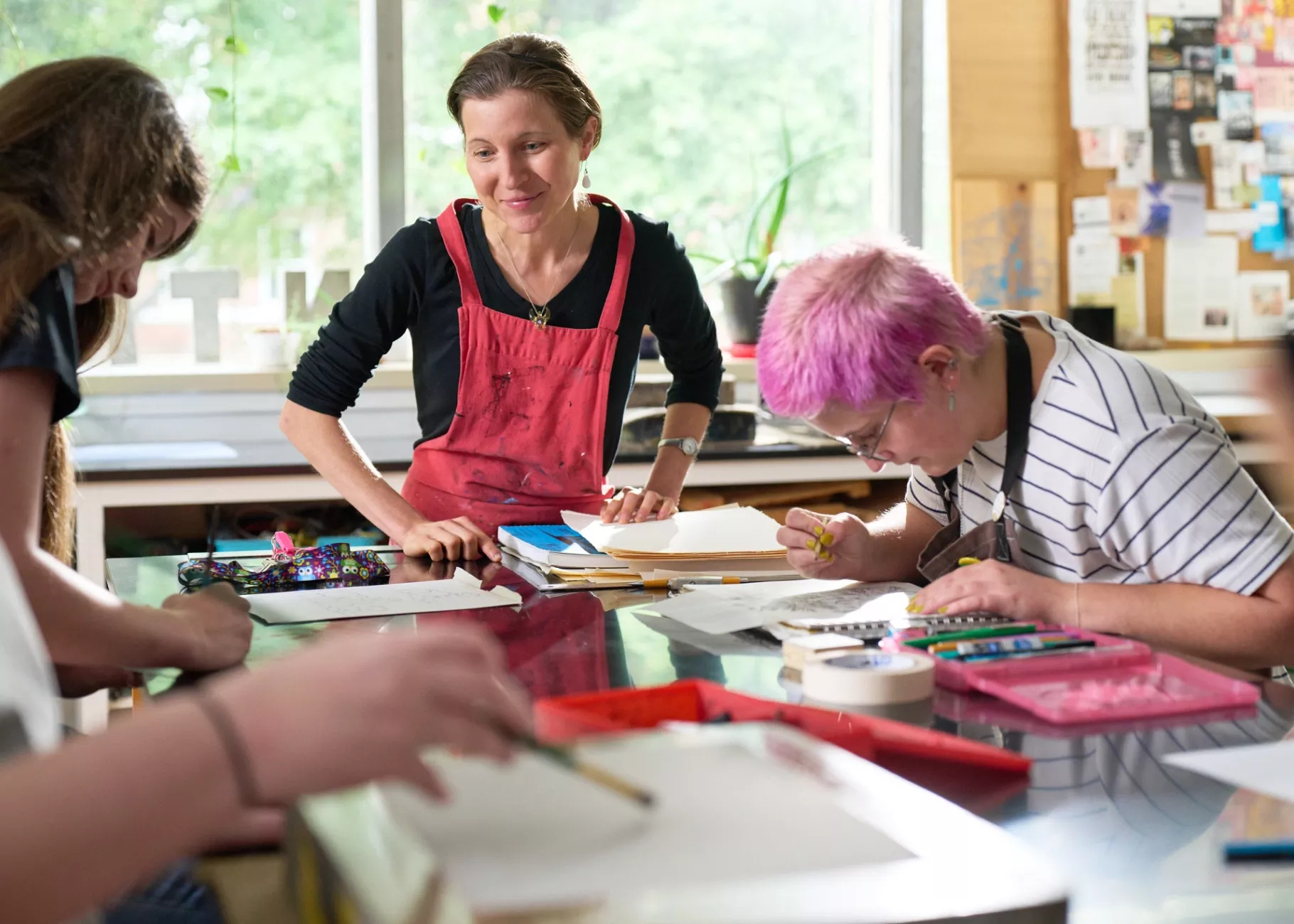
The Art + Design curriculum emphasizes hands-on learning, conceptual development and professional practice. Students graduate with portfolios, real-world experience and the creative confidence to navigate a changing job market — whether entering the workforce, pursuing graduate study or launching independent creative careers.
Career outcomes and earnings vary based on role, industry, experience, location and additional education. Career pathways listed reflect common directions pursued by graduates and are informed by national labor and education data.
Transform Your Creative Vision Into Your Career
Ready to turn your artistic passion into professional power? Join Kentucky's leading Art + Design program where creativity meets cutting-edge career preparation. Your future in the creative economy starts with one decision.